























✅ What is ADS-L and what is FLARM
When you're flying—whether it's a paraglider, powered paraglider, glider, or ultralight— visibility and safety are paramount. Two systems play a major role in this: ADS-L and FLARM. Both make you electronically visible, but they do so in different ways and with different strengths.
ADS-L
-
Stands for Automatic Dependent Surveillance – Light.
-
Goal: Affordable, low-energy devices that transmit position and basic flight data – primarily for light aircraft and general aviation.
-
Transmission takes place via the SRD-860 frequency or, in the future, possibly also via mobile phone networks.
-
ADS-L is primarily used for monitoring (tracking/electronic conspicuity), not as a full-fledged collision warning system.
FLARM
-
Proprietary collision avoidance and traffic warning system, widely used by glider pilots, hang gliders, and small light aircraft.
-
FLARM devices read GPS and barometric data, transmit this data plus a forecast of the 3D flight path, and simultaneously receive signals from other FLARM devices to warn of collision risks.
-
FLARM is optimized for close-range interaction (e.g., within thermal clusters for gliders) and collision avoidance—less so for ATC monitoring or traffic with motorized aircraft.
🔍 Important differences between ADS-L and FLARM
| Feature | ADS-L | FLARM |
|---|---|---|
| Main purpose | Electronic visibility/surveillance | Collision warning & traffic detection in the vicinity |
| Relationship to ATC / Ground stations / General aviation | Good – ADS-L is intended to enable standardized visibility in U-space for many aircraft types | More for "independent" collision avoidance between FLARM-equipped aircraft; not primarily for ATC |
| Suitability for gliders / hang gliders / light aircraft | Yes – as an affordable visibility solution; often recommended in combination with FLARM | Very good – established, optimized for typical scenarios in gliding |
| Collision warning with FLARM devices | Not reliable – ADS-L is not a collision warning system | Yes – FLARM was and is one of the most widely used solutions for collision warning in small aircraft |
| Compatibility/interoperability with other systems | High – ADS-L is intended to serve as the standard for visibility of various aircraft categories | Limited – FLARM is proprietary and often only effective between FLARM devices; less optimized for motorized/commercial aircraft |
✅ Who / When is what suitable for
-
Goal: to be visible to as many aircraft types / ATC / U-Space as possible → ADS-L is useful.
-
Gliders, hang gliders, or similar with other light aircraft, collision avoidance in close proximity → FLARM is proven.
-
Mixed operation (motorized aircraft + gliders + general aviation) → A combination of FLARM + ADS-L can be useful: FLARM covers local traffic/collision risk, ADS-L ensures external visibility.
⚠️ Limitations / Things to keep in mind
-
ADS-L is not optimized for collision warning—it lacks precise predictions for safe evasive maneuvers.
-
A device that only has ADS-L could have disadvantages in pure glider thermal operation.
-
The spread and penetration of ADS-L is still in development – not all aircraft will be equipped with it immediately; interoperability depends on acceptance and equipment.
🧐 Conclusion
ADS-L and FLARM address similar goals (visibility, safety), but with different focuses:
-
ADS-L: Surveillance/visibility in larger airspace/U-space
-
FLARM: close collision avoidance, especially for gliders and light aircraft
Combining the two systems provides the greatest benefit: FLARM for collision warning in the immediate vicinity, ADS-L for visibility to other aircraft. remaining aviation and ATC.
In short
-
ADS-L: Long-range visibility, monitoring, "being seen."
-
Flarm: Close-range collision warning, "watch and warn."
Both systems complement each other perfectly—and more and more devices now combine both technologies.
In summary

Brief recommendations
-
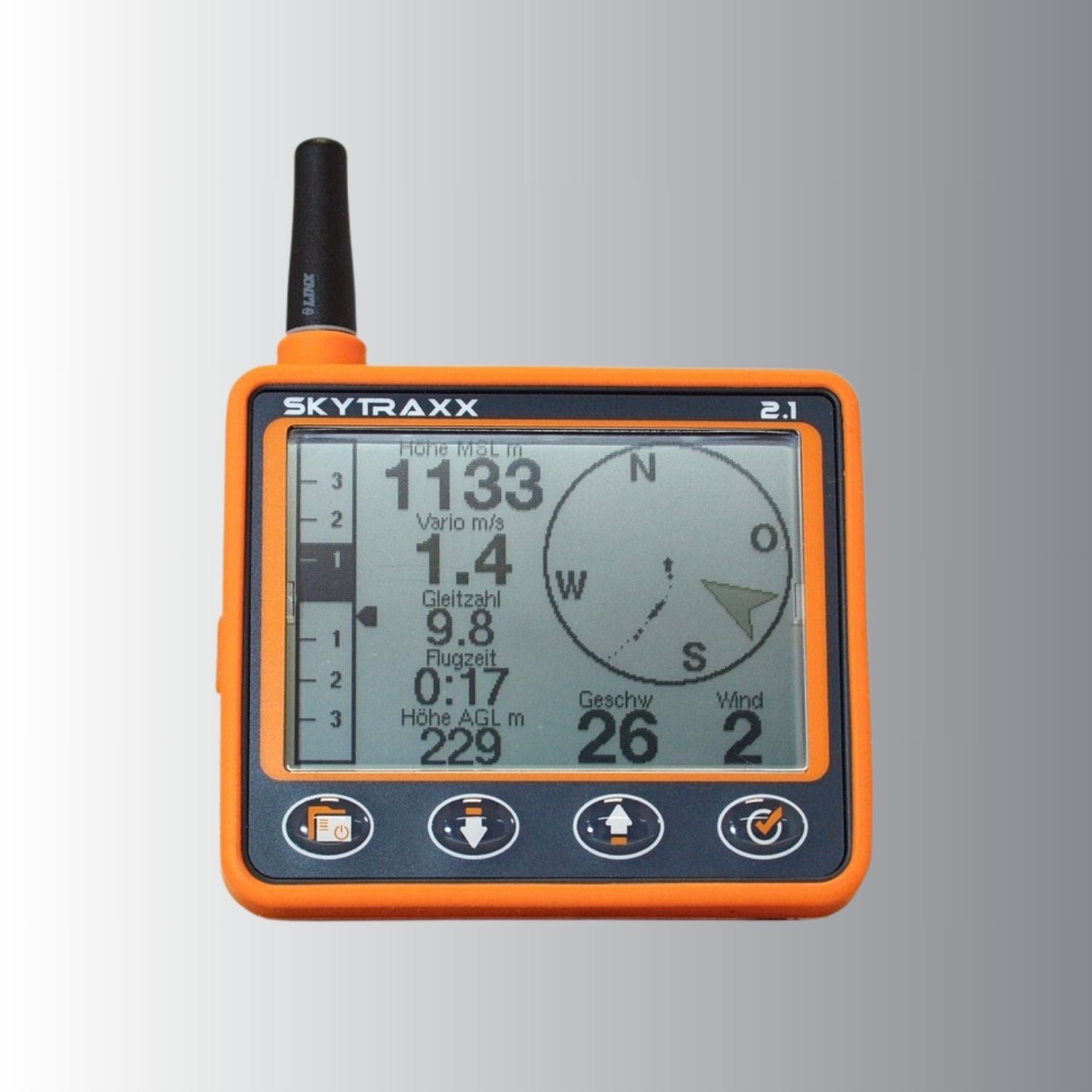
Skytraxx 5 with Fanet & FLARM & ADS-L ready – a proven, modern variometer with integrated FANET & FLARM, high sensor precision, and good display, ideal for paraglider or hang glider pilots who want collision warning and airspace monitoring.
-
Air3 7.35+ with Fanet & FLARM & ADS-L ready – a multifunctional Android-based "cockpit" device with a large display, GPS/navigation functions, and FLARM/FANET integration. Particularly interesting if you prefer a versatile device that also handles navigation and task management.
-
Skytraxx 5 miniFanet & FLARM & ADS-L ready– lightweight, compact version; practical for hike & fly or if you want to carry as little weight as possible but still want to use FLARM and FANET.
-
XC Tracer Maxx 3withFanet & FLARM & ADS-L ready –high-end instrument, suitable for XC and cross-country pilots looking for maximum functionality, precise data, and good navigation.
- XC Tracer Maxx 2 withFanet & FLARM & ADS-L ready –smaller high-end instrument with a smaller display than the 3, also suitable for XC and cross-country pilots, with high functionality, precise data, and navigation.
🛠️ Classification in ADS-L / FLARM context
-
Devices with integrated FLARM (e.g., Skytraxx 5, XC Tracer) offer—as in theory—good collision warning and traffic detection at close range (especially with other FLARM devices). This corresponds to the classic purpose of FLARM.
-
Some of the devices (e.g., Skytraxx 5) are labeled "ADS-L ready" in the shop—this means that, with the appropriate configuration or firmware, they could also send/receive ADS-L signals at some point.
-
This covers both visibility in U-space/for ATC (via ADS-L/EC) and collision and traffic warning at close range — in other words, the best possible combination.
Best regards
,YourParagliding24.chteam
We Love Paragliding ❤️