


Why your paragliding harness is more important to your safety than you think!
When paragliding
,
the focus is often on the glider, the weather, and flying technique. The paragliding harness, on the other hand, is usually seen as a comfort factor—a seat, storage space, and protector. But this view is too narrow. In reality, the harness is a central control and perception element that significantly influences how you fly, how you react, and how safe you are in the air.
The harness always flies with
you The harness is not just a passive connection between the pilot and the wing. It actively influences:
-
weight shift
-
the roll and pitch behavior
-
feedback from the wing
-
the damping of turbulence
-
reaction speed
A heavily damped harness can feel calm and comfortable – but at the same time it filters out important information from the air. This is precisely where a dangerous difference arises between perceived safety and actual safety.
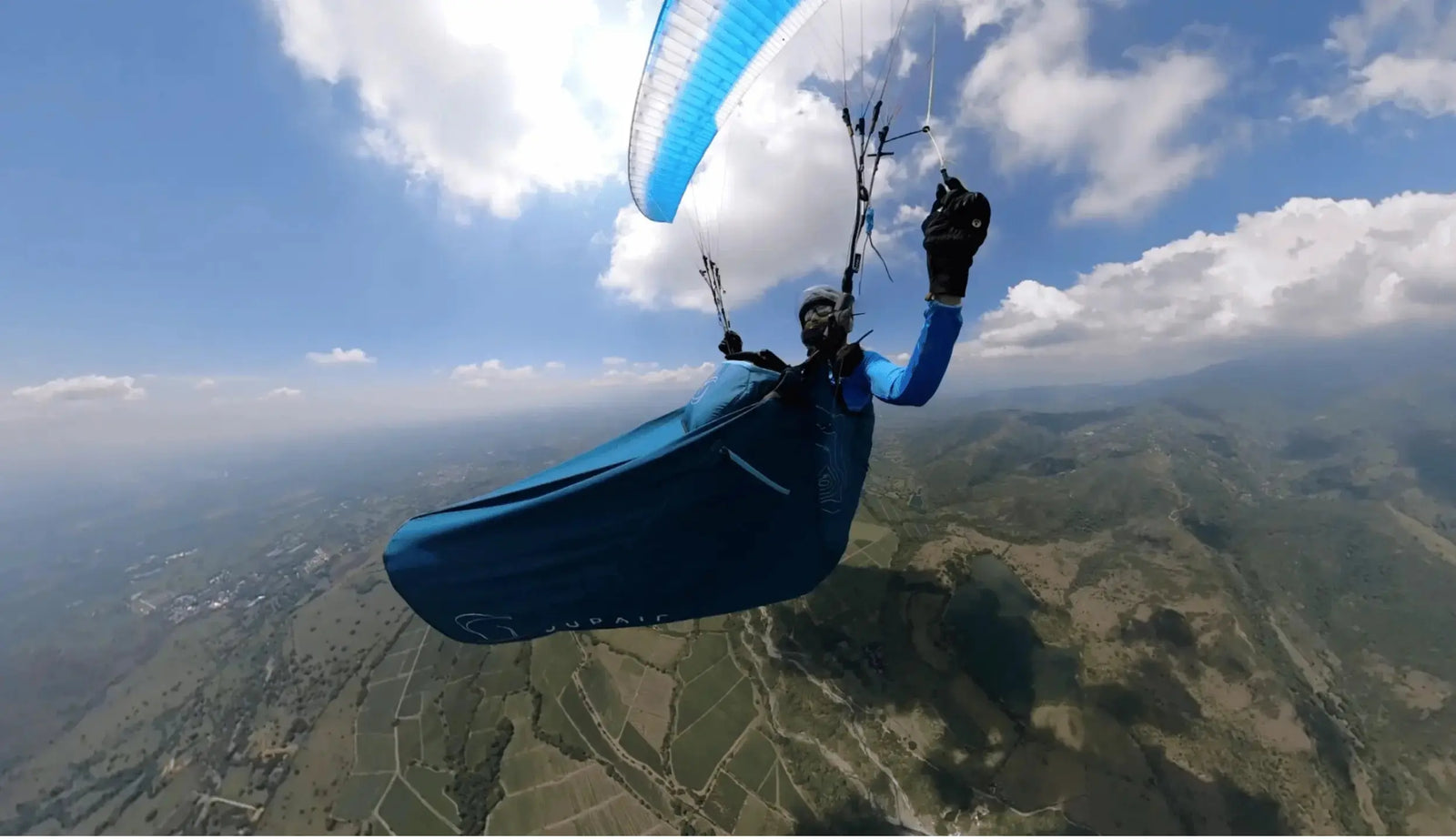
If you look at different designs – from classic seat harnessesto reclining harnesses – you will quickly realize how different the flying experience and feedback can feel.
Comfort can be deceiving
More comfort does not automatically mean more safety. On the contrary:
The more stable and calm a paraglider harness feels, the easier it is to feel that everything is under control – even when conditions become significantly more challenging.
This phenomenon is called risk compensation:
Those who feel safe automatically take more risks. This often happens unconsciously – for example through:
-
delayed decisions to abort
-
more daring line selection
-
smaller safety margins
-
staying longer in borderline conditions
Harness types – big differences
in flightWhether classic seat harness, reclining harness, lightweight or performance harness: the differences are enormous – not only in weight, but above all in:
-
Stability
-
Directness of feedback
-
Forgiveness
-
Mental strain
-
Need for reaction
A very direct, performance-oriented paraglider harness requires significantly more attention, coordination, and experience. A heavily damped model, on the other hand, can convey a deceptive sense of calm—especially in active thermals.
You can find a good overview of current models at paragliding24.ch
Perception: Why we often recognize dangers too late
Pilots make decisions based on what they see, feel, and interpret. If the feedback from the air is heavily filtered by the equipment, this results in a distorted perception:
-
Turbulence is felt later
-
Banking angles appear less dangerous
-
The energy of the paraglider is underestimated
-
Reactions are delayed
Or, to put it another way:
Those who feel less often react too late.
Especially in challenging conditions, this delay can mean the difference between maintaining control and losing control.
Typical adjustment errors – and their consequences
Many safety-related problems are not caused by the paraglider harness itself, but by incorrect adjustments. Common errors are:
-
Unfavorable sitting position
-
chest strap adjustment too tight or too loose
-
poorly adjusted shoulder straps
-
Unfavorable position of the emergency handle(keyword: right-handed and left-handed users)
DThese details influence, among other things:
-
Startup behavior
-
Weight control
-
Reaction speed
-
Rescue activation in an emergency
Small safety-related components such as carabinersalso play a crucial role here.
The harness also influences your decision-making behavior
An often underestimated point:
The paraglider harness not only affects the body—it also affects the mind. More cushioning and stability often lead to:
-
a greater sense of safety
-
greater willingness to take risks
-
less caution
-
a gradual shifting of boundaries
Many critical situations do not arise abruptly, but develop through precisely this process.
For whom this topic is particularly important
The following groups of pilots in particular benefit from a conscious examination of the harness:
-
Advanced recreational pilots
-
cross-country beginners
-
Pilots in safety training
-
Hike & fly pilots
-
Ambitious XC pilots
-
Those switching to new harness types
If you want to take the next step in your flying, you should not only change your wing, but also critically examine the interaction with your own harness.
Conclusion
The harness is much more than just a seat and protector. It influences:
-
how you perceive turbulence
-
how quickly you react
-
how boldly or cautiously you make decisions
-
and how big your
Those who consciously choose their paraglider harness, adjust it properly, and assess it realistically will not only fly more comfortably, but above all more controlled and safely.
In short
Your wing determines whether you fly.
Your harness determines how you fly – and how safely.
With this in mind...
Best regards
,YourParagliding24.chteam
We Love Paragliding ❤️