


























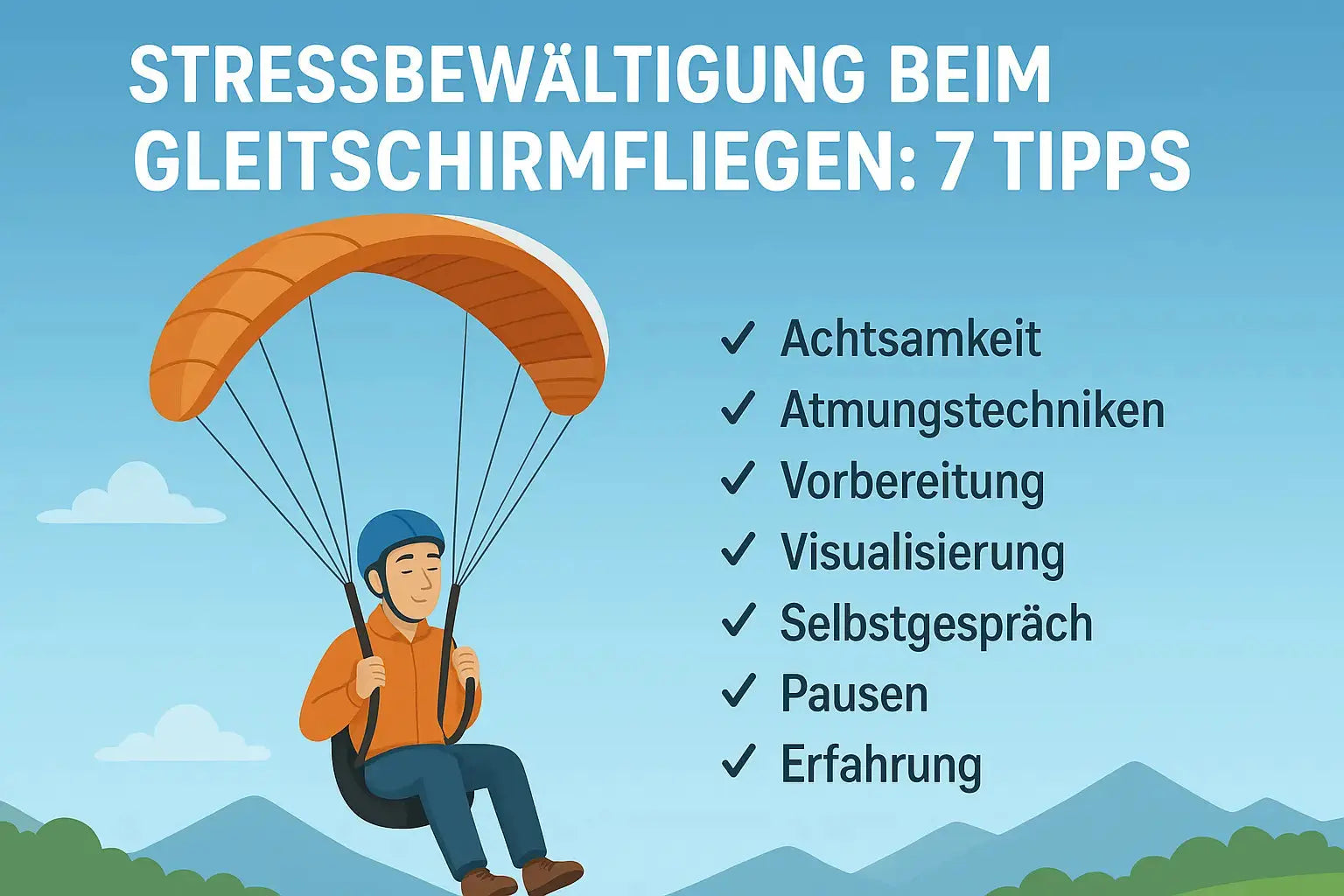

Stress management Paragliding is essential because, especially in the air, calmness and focus are crucial for safety and enjoyment. Mental stress such as fear of flying, uncertainty, or feeling overwhelmed can impair the experience or even become dangerous. With targeted mental training, pilots can learn to effectively reduce stress and better control themselves in stressful situations. In this article, "Stress Management in Paragliding: 7 Mental Training Exercises," we present 7 proven mental training methods that have been specially developed for paraglider pilots to create inner clarity, reduce fears, and improve the flying experience in the long term.
The importance of stress management in paragliding: 7 mental training exercises
Why mental training is essential for pilots
Paragliding requires not only physical skills, but above all mental strength. Pilots are constantly faced with unexpected situations, changing weather conditions, and personal challenges such as nervousness or pressure to perform. Those who do not consciously manage stress and emotions risk misjudgments or blackouts. Mental training has a preventive effect here and helps pilots remain focused and calm.
How stress affects flying
Stress often leads to increased adrenaline, which makes the circulation and thoughts restless. This can result in shorter reaction times and reduced concentration. Pilots who do not regulate their stress responses fly less safely and often fail to reach their full potential. Effective methodological approaches to mental preparation are therefore key to combining technique and safety.
1. Breathing techniques for calming and control
Fluid breathing as the key to relaxation
Conscious breathing helps to reduce stress symptoms and calm the nervous system. Pilots can reduce physical tension and promote mental clarity by breathing in and out slowly and deeply. This technique is particularly valuable in turbulence or before takeoff and landing.
Practical implementation for paraglider pilots
- Inhale for 3-4 seconds, exhale for 4-5 seconds
- Focus on your breathing and use counting
- Use several times before takeoff and in stressful situations
2. Visualization of successful flights
Use mental imagery
Visualization is a powerful tool that pilots use to mentally rehearse positive sequences of events. By imagining safe takeoffs, stable thermal flights, and clean landings, they train their brains for success. This builds self-confidence and reduces fear of the unknown situation.
Tips for effective visualization
- Take several minutes in a quiet environment
- Create detailed images of the flight: weather, sounds, movements
- Consciously replace negative thoughts with positive ones
3. Make
your
self-talk positive
Internal dialogue as a support
The way pilots talk to themselves has a strong influence on their emotional state. Negative or critical self-talk can increase stress. Constructive internal dialogue promotes calmness and focus.
Examples of helpful self-talk
- "I am well prepared and can handle this situation."
- "Every challenge is an opportunity to learn."
- "I am breathing calmly and staying in control."
4. Mindfulness for perceiving stress signals
Conscious recognition of internal and external reactions
Mindfulness means
recognizing
stress symptoms such as rapid heartbeat, muscle tension, or negative thoughts. notice them early on. This conscious awareness interrupts automatic reaction patterns and creates space for targeted countermeasures.Exercises to promote mindfulness
- Plan short moments of silence before the flight
- Raise awareness of bodily sensations through brief body checks
- Integrate regular mindfulness exercises into everyday life
5. Mental preparation for unexpected situations
Calculate risks and run through action plans in your head
Mental training should also prepare pilots for the unexpected: sudden weather changes, loss of thermals, or technical problems. Those who mentally rehearse scenarios in advance react faster, more confidently, and with less stress.
Example action strategies
- Memorize planned emergency landing sites before each flight
- Imagine situations involving sudden loss of control
- Visualize how to react calmly and systematically
6. Relaxation techniques for after the flight
Reduce stress and process experiences
After landing, it is just as important to reduce the stress of the flight. Progressive muscle relaxation or short meditations help to regenerate the body and mind. This allows you to approach the next day of flying in a more relaxed manner.
Recommended relaxation techniques
- Tense and relax muscle groups one by one
- Use guided meditations or breathing exercises
- Consciously integrate rest breaks into your daily routine
7. Regular mental training and exchange of experiences
Continuity as the key to sustainable stress management
Mental strength develops through regular training and exchange with other pilots. Joint reflection, openness to feedback, and attending workshops promote personal development and strengthen confidence in one's own ability to act.
Practical tips for a mental routine
- Schedule mental exercises daily or weekly
- Discuss flight experiences with colleagues or coaches
- Incorporate professional input, such as targeted mental training programs
In summary, stress management in paragliding is an essential component of safe, relaxed, and enjoyable flying. Breathing techniques, visualization, positive self-talk, and mindfulness form the basis, supplemented by mental preparation, relaxation exercises, and continuous exchange with like-minded people. This comprehensive mental training helps pilots find their inner compass and thus master challenges with confidence. If you want to further strengthen your mental fitness, it is worth taking a look at special offers such as this mental training program for paraglider pilots, which provides valuable practical tools. Start your journey to greater serenity and safety through stress management in paragliding now!